Capital Campaigns: Receiving Direction, Casting Vision, Raising Funds & Accomplishing Projects

Introduction: Buildings Are Tools, Not The Mission
A successful capital campaign isn't ultimately about constructing buildings. It’s about creating environments that remove barriers to ministry and advance the mission God has given your church. A carpenter isn’t passionate about his hammer. He’s excited by what he can accomplish with it. Capital campaigns are a tool to accomplish the mission God has called your church to. Nothing more.

Think about what God is calling your church to do that your current facilities are preventing you from doing. If you have a clear answer to that question, move forward. If not, pause and assess your motivation. Building something bigger to keep up with the church across town is not a vision your people will get behind. This helps move the conversation from building-centered thinking to mission-centered thinking. The most common failure is starting with blueprints and a budget amount instead of direction and vision.
There are four major components of a successful capital campaign - receiving direction, casting vision, raising funds & accomplishing projects. Those components are outlined below. You can also get a free PDF overview of the content below here. And if you’re looking for coaching on this topic beyond this article then visit benstapley.com/coach to schedule a free consultation. I would love to help you determine the obstacles you're facing and if I’m the best person to help you overcome them.
Part 1 - Receive Direction: Before You Build Anything, Know Why You're Building It
There are four areas of preparation that are needed before you embark on this journey. Spiritual readiness, have you prayed and discerned? Vision readiness, can you clearly explain why this matters? Financial readiness, can you responsibly sustain the project? Leadership readiness, do you have the capacity to lead it.
1. Spiritual Readiness - Start with prayer, not plans. Sometimes a church's facility committee has already chosen the carpet, selected the paint colors, named the building and designed the coffee bar before they've actually asked whether God wants the project. Commit to a season of discernment - not a weekend vote - that includes fasting, listening prayer and honest congregational input. Follow the example of Nehemiah. He began with a burden, prayer, assessment and vision before construction ever begins. And look for early warning signs in this process. Is the urgency driven by comparison, ego, or deferred maintenance dressed up as vision? If so, pump the breaks.
2. Vision Readiness - Congregations seldom unite around a vision that leadership is still debating. So make sure that your project solves a clearly identifiable ministry problem. Parking is preventing guests from attending. Children's space is limiting family ministry. Worship space no longer supports the congregation. The community ministry has outgrown existing facilities. Pressure-test the project against mission:
Does the facility plan serve discipleship, not the other way around?
Is there a ministry plan first, then a master plan?
Is the need clear and specific?
3. Financial Readiness - You need to be asking two questions. Is the project too small or too big? If the project doesn’t exceed 50% of the annual budget, then it is probably too small to rally your congregation to for the next 24 months. If the project is more than 2x your annual giving, it is probably too big. Now I know that God can move mountains, but trying to raise more than that over a 2-3 year period historically has become problematic for churches. Avoid leading your people on a never ending journey.
4. Leadership Readiness - Build leadership alignment before congregational alignment. Work toward concentric circles of ownership from senior leadership to board / elders to staff to key leaders to congregation to community. The closer someone is to leadership, the earlier they should understand and own the vision. Also realize that stress reveals fragility. A campaign will show leadership weaknesses in your culture like distrust and mission drift. Building projects cause divisions, they don’t heal them. Address existing disagreements before fostering new ones. Don't let your facility vision outrun your organizational health.
Before moving onto the next section, give your church a grade letter on the four areas of readiness. See where you are weakest and what requires the most attention moving forward. Where is your lowest score? That is your pre-campaign work. Once you're confident about where God is leading, your next responsibility is helping others see it.
Part 2 - Cast Vision: Move From “What Are We Building” To “Why Does It Matter”
1. Don't Sell The Project, Tell The Story - People don't want a quarter-inch drill bit. They want a quarter-inch hole. Your congregation doesn't want a children's wing. They want their grandchildren to know Jesus. They don't want parking spaces. They want their neighbor to feel welcome. They don't want a renovated auditorium. They want people to encounter them. Your congregation is about the ministry and those things make it possible, leverage that. And don’t use a thermometer to track the progress of how much funds have been raised. Thermometers measure temperature. Vision creates heat. Cast vision!
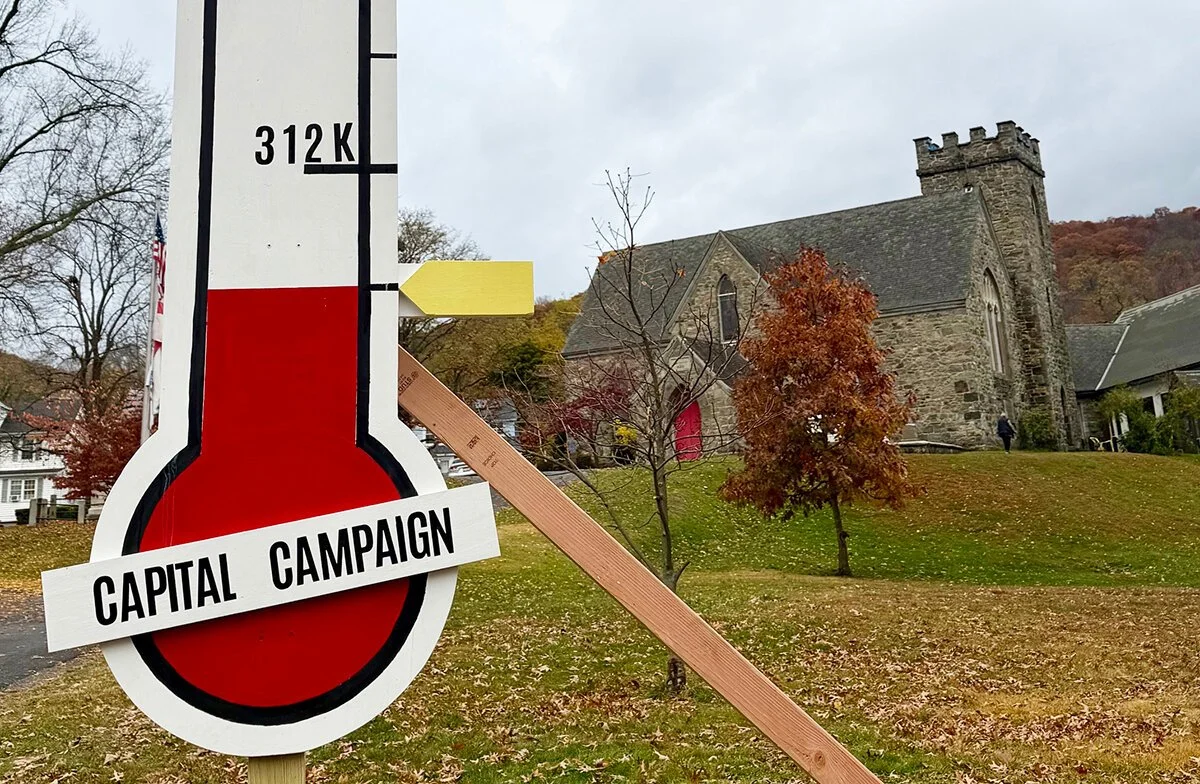
2. Develop The Campaign Narrative - A simple framework goes from where we've been, to where we are, to where God is leading, to what we must do, to what becomes possible. A strong vision answers these questions…
Why are we doing this? The ministry challenge.
Why now? The urgency.
What are we building? The solution.
What Kingdom impact will result? The mission outcome.
3. Make The Vision Tangible - Use renderings, plans, site tours, and before-and-after images. Anything that helps visualize the vision. I’ve done this in the past with a simple prop. An empty chair. I’ve placed it in front of me to communicate that it is empty because our parking lot is full, ‘someone can’t sit here because they can’t park out there.’ That prop preached. Simple, visual and effective. Figure out what your prop is and go on tour with it!

4. Communicate More Than Feels Necessary - Leverage every gathering to communicate such as vision night, Sunday services, small groups, lobby conversations, intentional lunches, etc. And leverage every communication channel to communicate. What will feel repetitive to leadership will feel brand-new to everyone else. Leadership will have been discussing the project for months before the congregation hears about it. The formal launch should feel like the culmination of conversations, not the beginning. People won’t commute until they clearly understand the commitment. A robust communication timeline has four phases.
Internal: Working with key stakeholders towards feasibility & development.
Quiet: Talking with key influencers to secure a substantial portion of the goal.
Public: Talking to the public for a month of focused vision and teaching.
Fulfillment: Following up with two years of stewardship, gratitude and reporting.
Part 3 - Raise Funds: Build A Culture Of Generosity
Communication alone doesn't build anything. Eventually people must decide whether they are willing to invest personally in making that vision possible.
1. Don't Make Generosity About Buildings - Every church has at least three givers: Those who give immediately. Those who give eventually. And those who say, "Let me pray about it" until after the project is completed. Shift the culture from paying for a project to investing in Kingdom impact. The goal isn't, ‘we need your money to build this building.’ It's, ‘we're inviting you to invest in what God is going to do through this ministry.’
2. Teach Generosity Before Asking For Generosity - A campaign shouldn't be the only time a church talks about money. If it is, it won’t work. Teach throughout the year about stewardship, sacrifice, faith, kingdom investment and God's provision. This will prepare the path for a campaign. And keep it theologically sound. Some general principles below.
Patterns: Identify scriptural patterns instead of using proof-text verses as pressure.
Motivation: Joyful giving toward God’s purposes should be the motivating factor.
Result: The fruit should be joy and discipleship, not fatigue.
3. Leadership Goes First - In 1 Chronicles 29 David gave publicly before he asked the nation of Israel. David says that, ‘With all my resources I have provided for the temple of my God.’ We are told that ‘The next day they made sacrifices to the Lord’. He went first, they followed. Before asking the congregation to sacrifice, leaders should already have sacrificed themselves.
4. Make The Ask Clear People should understand the total project cost, campaign goal, giving period, how commitments work, how funds will be managed, what happens if circumstances change, what happens if more or less money is raised, etc. Build as much clarity as possible to create as much trust as possible. Below are a number of very practical ways to make the campaign clear.
Make giving simple and tracked.
Separate capital gifts from operating tithes to protect donor intent.
Share regular progress reports without turning Sundays into a thermometer show.
Follow up on commitments with graceful reminders.
Provide onramps for those who become part of your community during the campaign.
5. Celebrate Participation And Impact - Thank quickly and personally. Recognition is stewardship, not flattery. And don't only celebrate dollars. Celebrate everything which includes, first-time givers, stories of sacrifice, families praying together, milestones reached, construction progress, ministry impact, etc.
Part 4 - Accomplish Projects: From Inspiration To Execution
1. Identify Ownership - The campaign is not over on Commitment Sunday. You still need to establish clear project leadership. Clarify early who makes decisions, who controls scope, who communicates with contractors, who approves changes, who communicates with the congregation, who owns the budget, etc. Ambiguity becomes expensive during construction.
2. Build The Right Team - Some of the players on the team include an architect, engineer, general contractor, construction manager, financial advisors, legal counsel, fundraiser, and key ministry representatives. Pastors know ministry. General contractors know construction. You need both at the table. Another suggestion is to pair a campaign team with a building team. This gives you two teams, one finish line. The campaign team keeps people inspired and informed. The building team keeps the project on scope and budget. If one person tries to be both, the sermons get shorter and the invoices get longer.
3. Manage The Three Tensions - Every construction project involves tension between scope, cost and schedule. If one changes, the others are affected. Leadership needs to determine ahead of time: What is essential? What is desirable? What can wait? This prevents mission creep and emotionally driven change orders. Also prepare for surprises. Construction projects rarely unfold exactly as imagined. Prepare your congregation for the reality that plans will evolve without undermining confidence in the overall vision.
4. Finish Spiritually, Not Just Physically - The finish line isn't the certificate of occupancy. Celebrate what God has done. Thank volunteers, donors and leaders. Pray over the facility. Tell stories. Dedicate the space to ministry. Cut the red ribbon with oversized scissors. And then actually use it for the mission you told people it would accomplish.
Conclusion
I hope these four components of a successful capital campaign provide you with a roadmap at your church. If there is a component I missed, let me know. I would love to hear from you and learn from you. In the end, the goal of a capital campaign isn't a bigger building, it's greater Kingdom capacity. Also, if you’re looking for coaching on this topic beyond this article then visit benstapley.com/coach to schedule a free consultation. I would love to help you determine the obstacles you're facing and if I’m the best person to help you overcome them.